How to store and display darkroom prints without damaging them
By Daniel Havelock — Founder,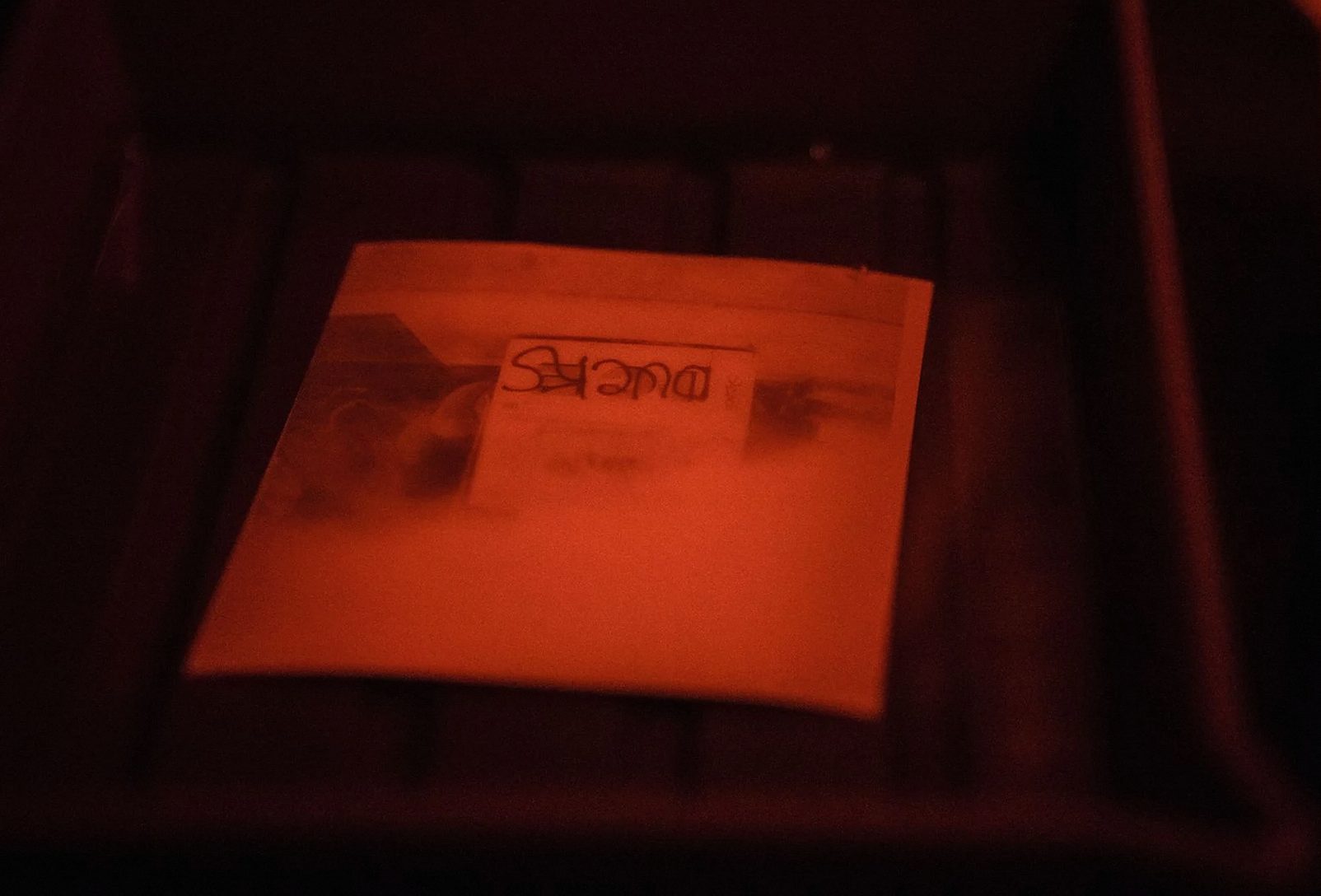
Practical guidance for collectors and portrait clients receiving fibre-base prints
A fibre-base darkroom print handled and stored correctly will outlast most of the people who own it. Handled carelessly, it can yellow, crack, or fade within a decade. The difference is mostly in a few straightforward habits that are easy to maintain once you know what they are.
Why fibre-base paper behaves differently from RC
Resin-coated (RC) paper is the standard for machine printing and quick proofing. It dries flat, processes fast, and is reasonably stable. Fibre-base paper takes longer to process, requires a longer wash, and needs to be dried under tension to prevent curling. In return, it is more archivally stable and responds better to toning. The prints from Urban Moonfield's darkroom are all fibre-base, selenium-toned for additional stability.
Storage
Store prints flat in acid-free sleeves or interleaved with acid-free tissue. Do not store them in ordinary plastic sleeves, which can off-gas and affect the silver layer over time. A cool, dry environment is better than a warm one; avoid attics and basements where temperature and humidity fluctuate. If you are storing multiple prints together, do not let them touch each other directly.
Framing and display
Use UV-filtering glazing if the print will be displayed in a room with direct sunlight. Museum glass is the best option; standard UV-filtering acrylic is a reasonable alternative. Mount the print with acid-free materials; avoid rubber cement or pressure-sensitive adhesives that will yellow and transfer to the print surface over time.
Keep a small gap between the print surface and the glazing. A print pressed directly against glass can stick over time, particularly in humid conditions. A mat board of at least 4-ply thickness provides the necessary separation and also frames the image in a way that most prints benefit from.
What to do if a print is damaged
Minor surface marks from handling can sometimes be reduced by a conservator. Yellowing from inadequate fixing or washing at the time of printing is not reversible. If you receive a print from Urban Moonfield and notice anything unusual about its appearance within the first few weeks, contact the studio directly. Daniel will assess whether the issue is in the print or in the storage conditions.
The prints made in this darkroom are intended to be kept. If you have questions about a specific print you have received, reach out to the studio at hello@urban-moonfield.com.